What does abuse against men look like?
Family violence is a pattern of abusive tactics used to exert power and control over a partner or family member.
It can take many forms — including emotional, psychological, covert, sexual, financial, and legal abuse — and often occurs behind closed doors.
Understanding these categories is the first step in reclaiming your reality, your peace, and your sense of self.
Types of abuse toward men
Below is a comprehensive list of the types of abuse men experience, from maternal superiority, false allegations, threats, and rage.
The start of the relationship
False Bonding

This is where it begins. The illusion of warmth, safety, and connection.
The charm. The love bombing. The flattery, the passionate sex and future-faking – all to build trust at a very fast pace.
It’s a whirlwind romance that feels like you’ve found something rare — a partner who truly sees you.
But the mask is temporary and the hook is hidden.
Intense affection, praise, and gifts to fast-track trust and emotional dependence.
Promising a glowing future (marriage, kids, security) to gain control, with no intention to follow through.
Reinforcing control by cycling abuse and affection until emotional dependency forms.
The world starts to distort
Psychological Manipulation
Here, it’s the stage for gaslighting, projection, and blame-shifting.
You’re told you’re the problem — unstable, abusive, imagining things. There is nothing you can do right.
Over time, your grip on reality loosens. You stop trusting your memory, your instincts — even your sanity. — so much so that you start relying on them to interpret your world for you.
Constant correction, nitpicking, or put-downs to undermine self-worth.
Suggesting you're mentally unwell, unstable, or weaponise terms like “toxic masculinity”.
Twisting situations so you’re responsible for their actions or outcomes.
Sudden withdrawal of affection or support after securing control.
Accusing you of their own behaviours (e.g., lying, cheating, manipulation).
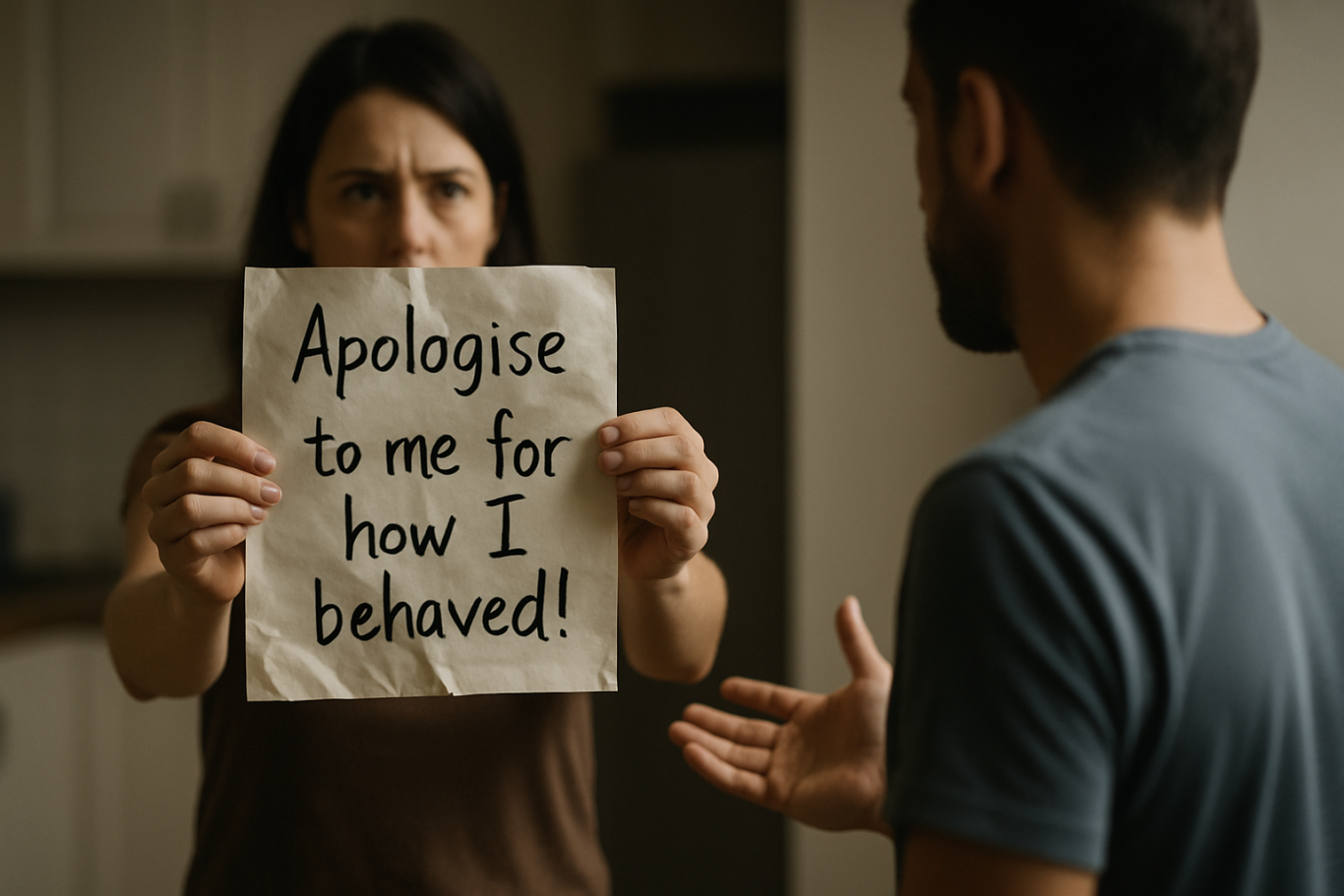
Deny, Attack, Reverse Victim and Offender – a tactic to avoid accountability, by manipulating the victim into apologising for the abuser's behaviour
You emotions are twisted
Emotional Manipulation

This is a place becomes a war zone of your own emotions. Where your feelings are weaponised. The abuser uses your triggers to elicit a Fight, Flight, Freeze, or Fawn response.
You're shamed. Mocked. Told you’re overreacting or too sensitive.
If you raise a concern? You opinions and feelings a minimised.
If you react in pain? You quickly get painted as the aggressor.
It’s a real-time emotional rollercoaster — and it leaves you doubting whether you're even allowed to feel anything other than shame or guilt
Using your values, past actions, or vulnerabilities against you.
Framing your needs as dramatic or selfish. Harder still as men are told to “man up” and this is exploited.
Undermining your voice and thoughts.
Withholding affection or communication to punish or control.
Provoking you until you react emotionally, then using that reaction against you. `
Your agency is limited
Control & Suppression

Here the abuser ensures control runs through everything.
Your money is tightly controlled. You’re the provider, it’s hers to spend. Her money is her money.
Every decision or action you make needs a nod of approval from her. Your hobbies, your space, your rest — all become things you need to negotiate in order to enjoy.
Your very liberty, such as sleep, are deprived
Controlling money, sabotaging your career, or expecting financial support without contribution.
Justifying control through gender, status, or culture.
Controlling trivial or daily aspects of your life. Often dismissed as ‘nagging’ – and not seen as a tool for control.
Discouraging passions or activities outside their control.
Checking messages, GPS, or interrogating daily movements.
Limiting your movement, personal space within the home, making the space uncomfortable.
Disrupting sleep, toilet breaks, rest time as a method of mental destabilisation.
The exits out are blocked
Entrapment

Your isolated from your support networks, You're interrogated and broken down. You're pressured to ‘confess’ to things you didn’t do – usually to just make the conflicts stop. You begin to believe that the act of leaving this relationship would be selfish, harmful, or even dangerous.
You might hear threats of suicide. Of abandonment. Or ruining your reputation
And if you're a father, the maternal superiority myth is used to minimise your parental role — ‘You're not capable. You're a man, you wouldn’t know how to feed her. They're upset, they need their mum, not their dad.’
Men are often conditioned not to ask for help or admit confusion or fear — making them more susceptible to long-term control through guilt or parental threats.
Repeated questioning to wear down boundaries or create fear.
Used to maintain guilt-driven compliance.
Weaponising societal bias that assumes mums are inherently better carers in order to isolate or disempower fathers.
Coercing admissions to things you didn’t do, often to create guilt or control.
Used to create fear of leaving the abuser.
Abuse is hidden from the outside world
Covert Behavioural Tactics

Here, the abuse is subtle, plausible, and often invisible to outsiders. It's about manipulation that’s deniable, confusing, and psychologically corrosive.
The abuse is buried under smiles and excuses. Stonewalling. Fake forgetfulness. Passive-aggression.
They play the perfect, kind hearted, partner in public — and undermine you in private.
And if you speak out? You sound deluded – “what are you talking about, she’s so lovely” or bitter and hypersensitive “oh I think you’re missreading it”
This is the psychological fog — and you're drowning in it.
Undermining you in the guise of concern for you or support of you
Intermittent niceness to confuse and control.
Creating a narrative of injury as a way to make you perform a task
Withholding, forcing, guilt-tripping, or using sex as punishment/reward. Mocking sexual performance, shaming body image, or comparing to “real men.”
Creating chaos or conflict just as things stabilise.
“Forgetting” promises, events, or needs as a control tactic.
Pretending to be incapable to force you to take over everything.
Charm in public, cruelty in private — making it hard to be believed.
Long term patterns of abuse
Emotional Sabotage & Self-Doubt
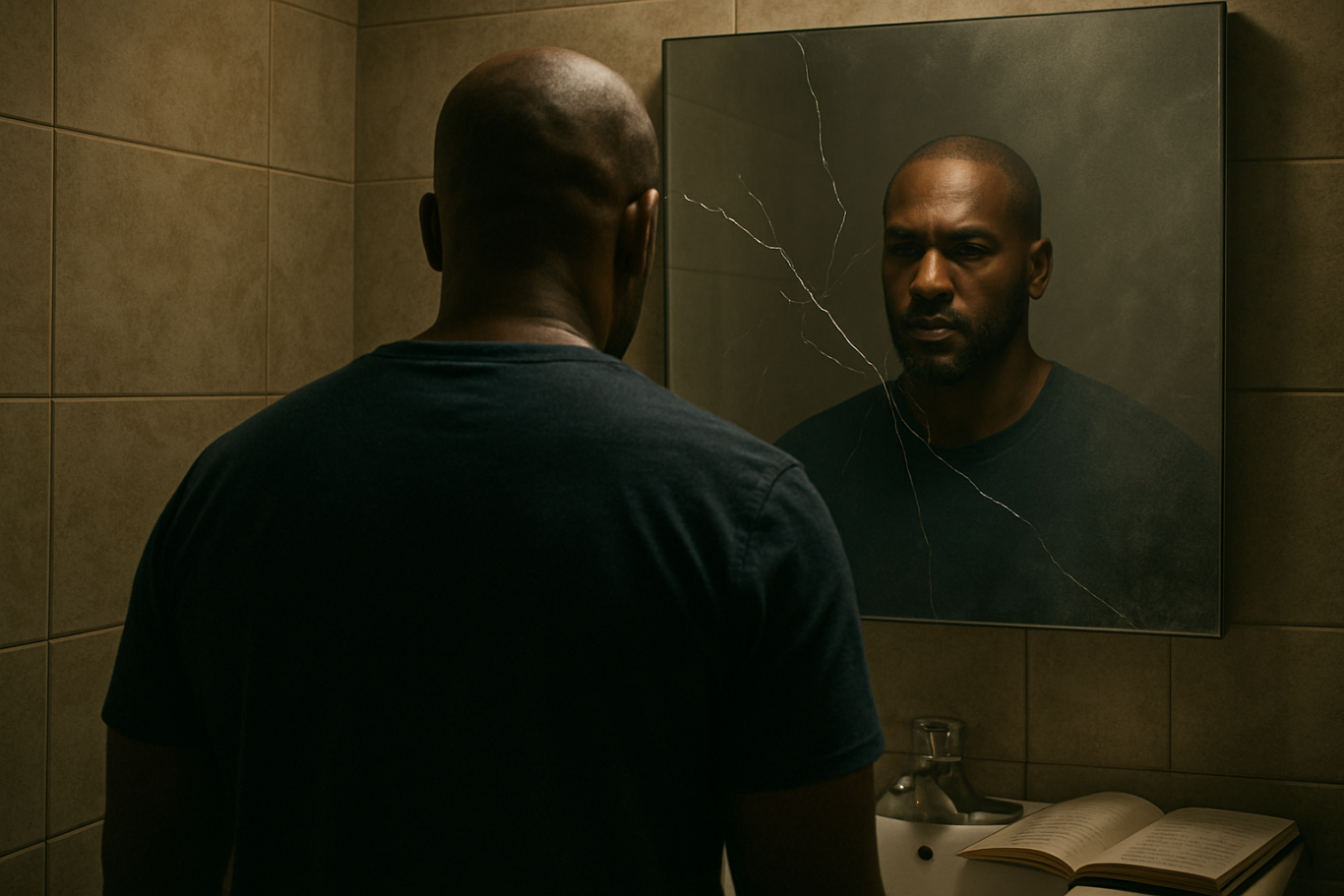
These are longer-term, cumulative strategies used to dismantle your sense of self.
Here you're told you can’t possibly survive without them “after all I’ve done for you” The feeling of joy becomes associated with guilt.
You're accused of being selfish for needing peace. Your kindness is twisted. Your stories rewritten into weaponised labels of “toxic masculinity”.
Over time, you stop trusting in yourself. You stop feeling like a man. Or a father. Or a person who even matters.
Undermining Self-Trust
“You’re too sensitive / paranoid / dramatic.” Reinforced by external social disbelief “You sure you’re not the problem?”. “happy wife, happy life”.
Repeatedly violating or dismissing your limits.
Using your kindness against you: “You say you care, but…”.
Humiliating or emasculating the man for showing vulnerability, crying, needing help, or seeking therapy.
Making you feel bad for enjoying anything without them.
Dictating how you describe the relationship or how the partner is perceived.
Using any frustration, no matter how restrained, as proof of volatility or danger. “Toxic Masculinity” label.
Using others to abuse you on their behalf
Abuse by Proxy

Family. Friends. Police, CPS, Teachers. Therapists. They are all weaponised against you with false allegations, triangulation, smear campaigns.
You're the villain in a play that you didn’t write.
And no matter what you say, by the time your dinner guests have taken a seat at the table, they have already drunk the kool aid.
Comparing you to others or involving third parties to provoke insecurity or jealousy.
Individuals such as friends and family that are manipulated into reinforcing the abuser’s narrative or harassing you.
Using fabricated claims to weaponise institutions, communities, and relationships.
Manipulating doctors or schools to believe you are incapable of parenting.
Using religion, culture, or morality to shame or coerce compliance.
Enlisting lawyers, CPS, police, to manipulate or harm. Making false allegations of abuse.
Turning your children against you through lies, guilt, or manipulation.
Abuse continues after you exit
Post-Separation Abuse & Retaliation

Separation should mean freedom. But the abuse doesn’t stop — it just evolves and sometimes escalates.
They weaponise custody. Misuse the legal system. Spread false claims to schools and services. They weaponise your own mental health challenges as a survivor of abuse and have you mislabelled as a danger.
You're still being watched. Punished. Undermined as a father. Because in their eyes, leaving is the ultimate betrayal — and you must pay for it.
Using courts or systems to punish or exhaust. Also uses the system’s tendency to default to women as victims to pre-emptively accuse or silence the male parent.
Unfounded reports to CPS, police, or health services.
Smearing your name to community, schools, or professionals. Leverages toxic stereotypes (e.g., absent father, angry ex) to isolate and discredit the male survivor.
Undermining your authority or sabotaging your role.
Exploiting access to DV shelters, police support, and legal aid while the male partner is left unsupported or disbelieved.
Monitoring or tracking you post-separation.
Claiming you are unwell to gain advantage or discredit. Abusers may point to male trauma reactions (panic, dissociation, frustration) as “dangerous” behaviour.