
How do you exit an abusive relationship?
Leaving an abusive relationship is a significant, and often dangerous, step. It requires careful planning and emotional preparation.
The process is rarely linear — it’s okay to go at your own pace. The following tools and considerations will help you stay focused, grounded, and safe during your exit.
You Don’t Have to Be Fully Ready to Leave. You Just Have to Be Safe Enough to Start.
Planning is not about perfection — it’s about protection. Even small steps like journaling, saving $20, or talking to a friend move you closer to freedom. You deserve safety, clarity, and peace. This is the beginning of reclaiming your life.
“It is tough to make the decision to leave, but when you do, and you have the support around you to do so, it is good and it is worth it. It is good to talk. You must always talk to people to get through it.”
- DA survivor – Unknown
Phase 1: Prepare Yourself and Build the "Plan"
Before anything changes on the outside, you need clarity, protection, and support on the inside. This stage is about laying a strong foundation — emotionally, legally, and practically — so you can exit safely and with confidence.

1. Prioritise Safety Above All
Your physical safety is the first and most urgent priority. Many abusers escalate control or violence during separation.
How to do this:
- Identify a safe location (even if temporary).
- Pack an emergency bag with ID, cash, charger, medications, keys.
- Know emergency contacts: police, local shelters, or domestic violence helplines.
- Leave when the abuser is least likely to notice, such as during work or a routine outing.

2. Keep Records and Journal Regularly
This one is so important it comes second after safety. Document everything.
Abuse can be dismissed or minimised without evidence, so having a written record helps preserve your truth.
How to do this:
- Journal key events with dates, and details. Capturing what the abusive partner did; Patterns of abuse (this is critical) - was it repeated, continous, did it escalate?; Evidence of impact on your capacity to function
- Save screenshots or audio / video recordings (if it’s legal in your Country / State)
- Use a secure cloud folder or email records to a trusted friend or to an account the abuser can’t access.
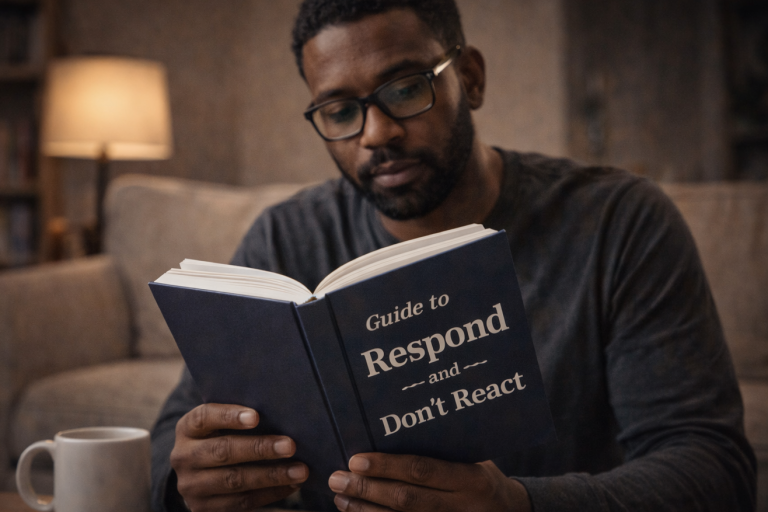
3. Protect Yourself Emotionally and Mentally
Even when you’ve left physically, emotional manipulation may likely continue.
[See here for a guide on Respond - Dont React]
How to do this:
- Expect guilt-tripping, threats, or love bombing — these are tactics, not sincere change.
- Say to yourself: “This is part of the pattern.”
- Stay grounded by reading your journal, checking your timeline, or speaking to someone who knows the truth.
- Prepare emotional support contingencies if things dont go to plan.
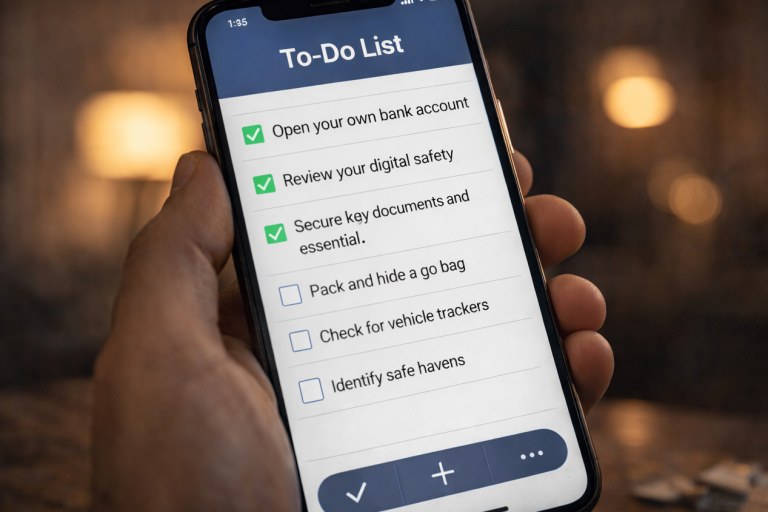
4. Create an Exit Checklist
Having a list gives you focus and prevents you from forgetting critical items in a moment of panic.
[See here for an example Exit Checklist]
How to do this:
- Start with essentials: passports, birth certificates, bank cards, medications, keys, cash, insurance policies, school info, and legal documents.
- Make a list of accounts and data to change passwords on: Bank, email, Centerlink, MyGov, Insurance etc.
- Change the password on your phone and back it up.
- Prepare childcare needs, emotional supports, and who to notify once safe.

5. Plan Around the Abuser’s Patterns
Every abuser has patterns — when they’re home, when they’re calm, when they’re distracted.
How to do this:
- Watch for times when their behaviour is most predictable or when they’re physically absent.
- Use these windows to pack, prepare, or make calls.
- Don’t rely on their “nice” moments to try and leave — those are often followed by intense backlash.

6. Digital Safety and Information Control
Many abusers use tech to monitor or intimidate. Digital safety is key.
How to do this:
- Turn off location services on phones, apps, and shared accounts.
- Use incognito mode or safe browsing tools.
- Clear browser history and clear cookies.
- Change all passwords (email, banking, social media) from a secure device or create new accounts.
- Check for tracking devices (e.g. on your car) or hidden apps on your phone — especially if they’re tech-savvy.
- Use a new device if possible or do a factory reset.

7. Build a Safe Support Network
Leaving can feel isolating. Support gives you both strength and protection.
How to do this:
- Confide in at least one trusted person — ideally someone who understands family violence.
- Let them know your plan and ask if they can be your emergency contact.
- Avoid confiding in mutual friends or family who might “keep the peace” at your expense.

8. Practise Your Exit in Advance
In high-stress moments, our thinking can freeze. Rehearsing your plan builds confidence.
How to do this:
- Walk through the steps in your mind or on paper: What will you do first? Where will you go? Who will you call?
- Practise neutral responses like, “Now’s not a good time to talk” or “We’ll talk later.”
- If possible, do a dry run — drive the route, pack the bag, confirm your backup plan.

9. Organise Legal and Financial Essentials
Many abusers control access to money and documentation. Taking this power back is part of reclaiming your independence.
How to do this:
- Open a bank account in your name only.
- Start quietly saving money, even small amounts.
- Make copies of everything: ID, leases, birth certificates, car registration, court orders.
- Keep these copies off-site or online in a private cloud folder.

10. Preparing for False Allegations
Many male victims face sudden claims of abuse or neglect, especially during the exit stage.
[See here for a guide on Dealing with False Allegations]
How to do this:
- Noticing red flags that a false accusation may be coming (e.g. subtle threats, withholding children).
- What to document pre-emptively (e.g. changeovers, medical appointments, kids' statements).
- Staying calm and factual in all responses.

11. Dealing with CPS as a Male Victim
CPS workers are there to ensure the safety of your children — not to take sides. Many men face reports during separation, especially when false allegations are used as a tactic.
How to do this:
- Stay calm, factual, and child-focused in all interactions.
- Document parenting patterns — changeovers, health, school, and routines.
- Respond clearly and without emotion. Avoid blame.
- Get legal advice before signing anything or giving a formal statement.
“You do not have to be fearless to leave — you just have to believe that your safety and future matter”
- Unknown
Phase 2: Enact and Navigate the Exit
Leaving is not a single moment — it’s a process. This stage covers the actions and protections you’ll need during and immediately after the separation, especially around parenting, legal safeguards, and managing the emotional aftermath.

12. Plan How You’ll Communicate the Exit
You don’t need to justify your decision — but if contact is unavoidable, being prepared can reduce risk.
How to do this:
- Keep any conversation short, direct, and emotion-free.
- Use neutral phrases like “This decision is made” or “This is not up for discussion.”
- If it feels unsafe, consider leaving without telling them directly and informing them later through legal channels.
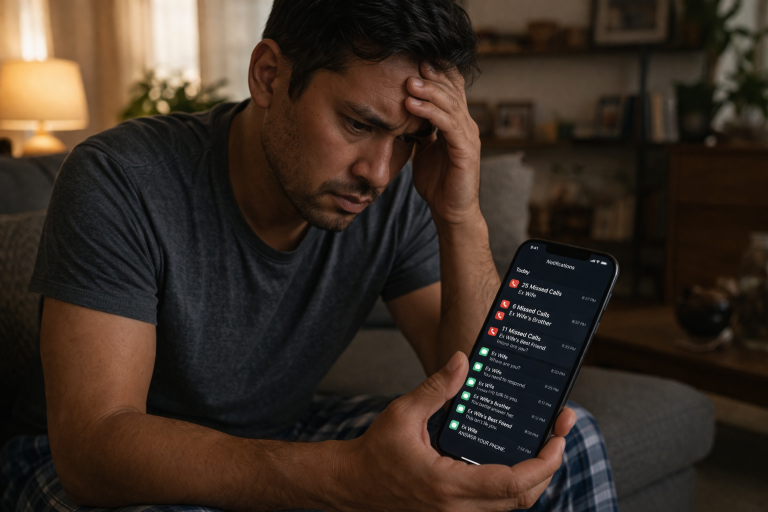
13. Prepare for Post-Separation Contact
You may still need to interact — especially if children, legal processes, or property are involved.
How to do this:
- Use communication apps like AppClose, OurFamilyWizard, or TalkingParents to create distance.
- Set boundaries around times, tone, and topics.
- Block or filter numbers where appropriate.
- Let your legal or support team know if any harassment continues.

14. Expect the Emotional Whiplash
Leaving is not the end of the struggle — it’s the beginning of your healing. Expect emotional highs and lows.
[see here for an article on Respond, Dont React]
How to do this:
- Understand that feelings of grief, doubt, or longing are normal.
- Remind yourself: “This is what withdrawal from trauma bonds feels like.”
- Stay connected to your support network and reach out when you feel pulled back.

15. Parenting During and After Exit
If you have kids, exiting safely means supporting them through confusion, fear, or loyalty binds.
How to do this:
- Use simple, honest language: “We’re not together because it wasn’t safe or kind.”
- Avoid blaming — focus on safety: “Everyone deserves to feel safe at home.”
- Stick to routines: predictability helps kids feel secure.
- Watch for trauma signs: regression, anxiety, or people-pleasing.
- If needed, seek a trauma-informed child therapist.

16. Parenting Arrangements
Clear parenting arrangements are essential for your children’s wellbeing — and your own protection.
[See here for an example parenting agreement]
How to do this:
- Parenting Plan — A written agreement between parents that outlines the care of the children. And may form the basis of future court orders.
- Consent orders — Legally binding and filed through the Family Court. If you have agreed arrangements, this can be done without a hearing.
- Don’t rush — High-conflict parents may try to pressure you into arrangements that don’t reflect the best interests of your children. Get advice. Take your time.

17. Binding Child Support Agreements
If you have financial means and want to create certainty outside of the standard Child Support Agency formula, a Binding Child Support Agreement (BCSA) may be useful.
How to do this:
- Get legal advice — These agreements are complex and require independent legal advice for both parties.
- Consider what’s fair and sustainable — Abuse survivors often want to prove they’re “good dads” by offering too much. Make sure what you offer aligns with your financial reality.
- Include non-cash contributions — like private school fees, medical costs, or extracurriculars to be included.
- Remember — it’s binding.

18. Legal Protection Orders
For any victim of abuse, applying for an IVO can feel complex
How to do this:
- Document everything — calm, factual records help cut through doubts.
- Bring evidence: screenshots, timelines, witness notes, police reports.
- State risk clearly — focus on harm to you or the children, not “who started it.”
- Expect scrutiny: applicants are often questioned — don’t let this stop you.
- An IVO can protect you from contact, abuse, and false claims — and create a legal paper trail.
Tips and things to watch for...
General
- Listen to your lawyer.
They’re your strategic partner. Understand their reasoning, ask questions, and stay engaged in the process. - Avoid assuming verbal agreements will be honoured.
If it's not in writing, it doesn’t exist — especially post-separation. Insist on formal documentation for everything. - Watch for informal “temporary” arrangements becoming permanent.
Even casual “just for now” setups can become a legal or psychological baseline. If unavoidable, then attempt to ensure everything is documented and time-bound to minimise the risk they become "permanent". - Avoid signing anything under pressure.
You are never obliged to sign immediately. Always take proposed agreements to your lawyer first.
On communiction with the abuser
- Keep a communication log.
Use a co-parenting app or secure file to record messages, requests, and incidents. Helps track patterns and protects you in disputes.
On parenting / custody
- Seek equal parental responsibility (if appropriate in your situation).
Especially for long-term decisions — like education, health, and religion. Don’t assume it’s automatic, even if you've always shared these responsibilities. - Avoid language like “lives with mum, spends time with dad.”
It creates a hierarchy. Use terms like “shared care,” or “lives with both parents” to reflect true equity. - Avoid vague wording.
Phrases like “reasonable time” or “as agreed between the parties” can cause conflict. Be specific with days, times, holidays, and changeovers. - Be clear about changeover procedures.
Document precise times and locations. This removes ambiguity and reduces the chance of tension or manipulation. - Capture events of cultural significance.
Include Diwali, Christmas, birthdays, or any other events that matter to you or your family — so they don’t become flashpoints. - Ensure school and daycare communication is shared.
Request that both parents be listed for direct updates. Don’t rely on one parent to forward important information. - Request equal access to records and documents.
Explicitly include access to school reports, medical records, and other key updates — directly from providers. - Consider a right of first refusal clause on custody.
If one parent is unavailable during their time, the other gets first option to care for the child — instead of defaulting to third parties. - Specify how disagreements are escalated.
Outline a clear process: discussion, then mediation, then legal advice. This shows maturity and avoids unnecessary litigation. - Include digital communication rights.
Ensure your connection continues on non-care days via phone or video — and specify frequency and timing. - Address travel and passport rights.
Clarify who holds the children’s passports, and whether both parents must consent to international travel.
On third parties
- When engaging with Police and CPS
Keep your communication calm, factual, and child-focused. Avoid emotional language or blame — focus on safety, wellbeing, and outcomes for the children
On optional considerations (if suitable for your situation)
- Clarify how disputes will be resolved.
Include a family dispute resolution clause before court action is allowed. This helps reduce adversarial approaches. - Stipulate expectations around new partners.
If helpful, define boundaries around when/how children are introduced to new partners — e.g. minimum timeframe or mutual agreement. - Include provisions for emergency care and backup arrangements.
Plan for what happens if one parent is sick, injured, or temporarily unable to care for the children. - Add a clause prohibiting derogatory remarks in front of the children.
Even if rarely enforced, it reflects a child-focused intent and sets behavioural expectations for both parties.